
Feature 012 Key papers
Mechanism for Climate Changes
Climate System Laboratory (CSL) explores mechanisms of the global/regional climate changes, which are caused by both anthropogenic forcing and natural variability. In particular, we focus on various climate feedbacks, which are resulted from complex interactions among climate system components, since it is a key to determine intensity and pattern of the global/regional climate changes. In addition, we pursue to...
- Anthropogenic climate changes and natural climate variation
- Climate susceptibility
- Regional climate changes and their mechanisms
- Arctic climate changes
- Changes in dominant climate modes
- Paleoclimate
Study regions Arctic · Tropical Atlantic (ITCZ) · Western Pacific warm pool
Read the feature
Feature 022 Key papers
Ocean-Atmosphere Interaction and El Niño
Ocean-atmosphere interaction plays a critical role in climate events and their changes. Climate System Laboratory (CSL) pursues to understand how ocean and atmosphere interact under various time/spatial scales and background flow, and how the interaction impacts on development, maintainance, and decay of the climate phenomena in tropics, mid-latitudes, and polar regions, with a special interest in their...
- El Niño dynamics
- El Niño teleconnection and impacts
- Tropical-Extratropical interaction
- Indian Ocean Dipole and Indian Ocean variability
- Pacific Decadal Oscillation and North Pacific variability
- Inter-basin interaction
- Nonlinear scale interaction
Study regions Eastern equatorial Pacific · Central equatorial Pacific
Read the feature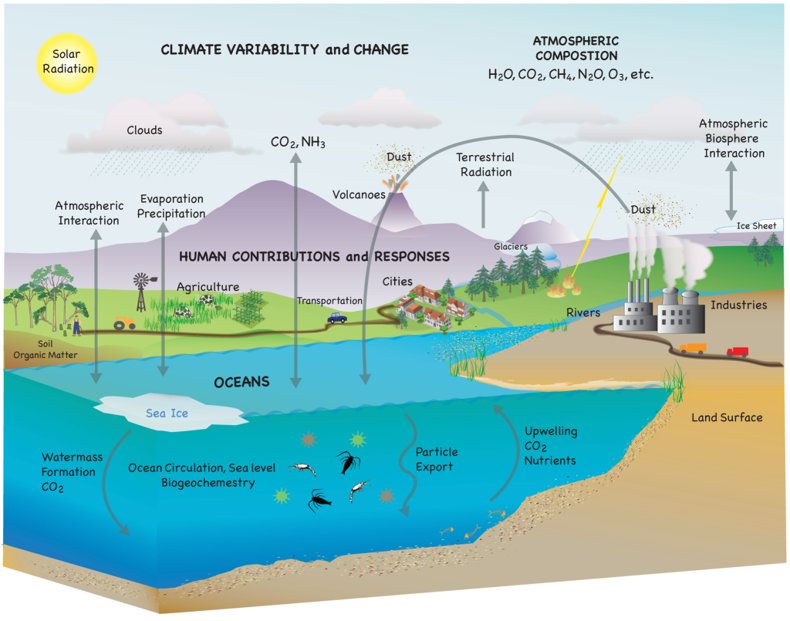
Feature 033 Key papers
Bio-Geochemical Processes
Earth's climate system consists of vegetation, ocean biogeochemistry, and carbon cycle as well as ocean, atmosphere, land, and cryosphere, and their mutual interactions play a pivotal role in climate change. Recently, the importance of the biogeochemical processes has been recognized increasingly as it has been reported that the biogeochemical feedbacks have significant contributions to global/regional climate...
- Global carbon cycle
- Modeling on ocean and terrestrial bio-geochemical process
- Ocean and terrestrial biological (geophysical and geochemical) feedback
- Earth system interaction
Study regions North America · Northeast Asia · Amazon
Read the feature
Feature 041 Key papers
High-Impacts Climate Event
Recently, extreme weather/climate events such as heatwave, cold surge, drought, flood, typhoon, and other extreme events occur more frequently over the globe. It is a challenging question of how much climate changes contribute to the frequent occurrence of extreme events these days. Since extreme climate events have a very strong social and economic impact, it is very important to understand the underlying...
- Low-frequency atmospheric dynamics
- Polar-Extratropical Interaction
- Tropospheric-stratospheric interaction
- Mechanisms for high-impacts climate events
- Predictability of high-impacts climate events
Study regions Korean Peninsula · North America
Read the feature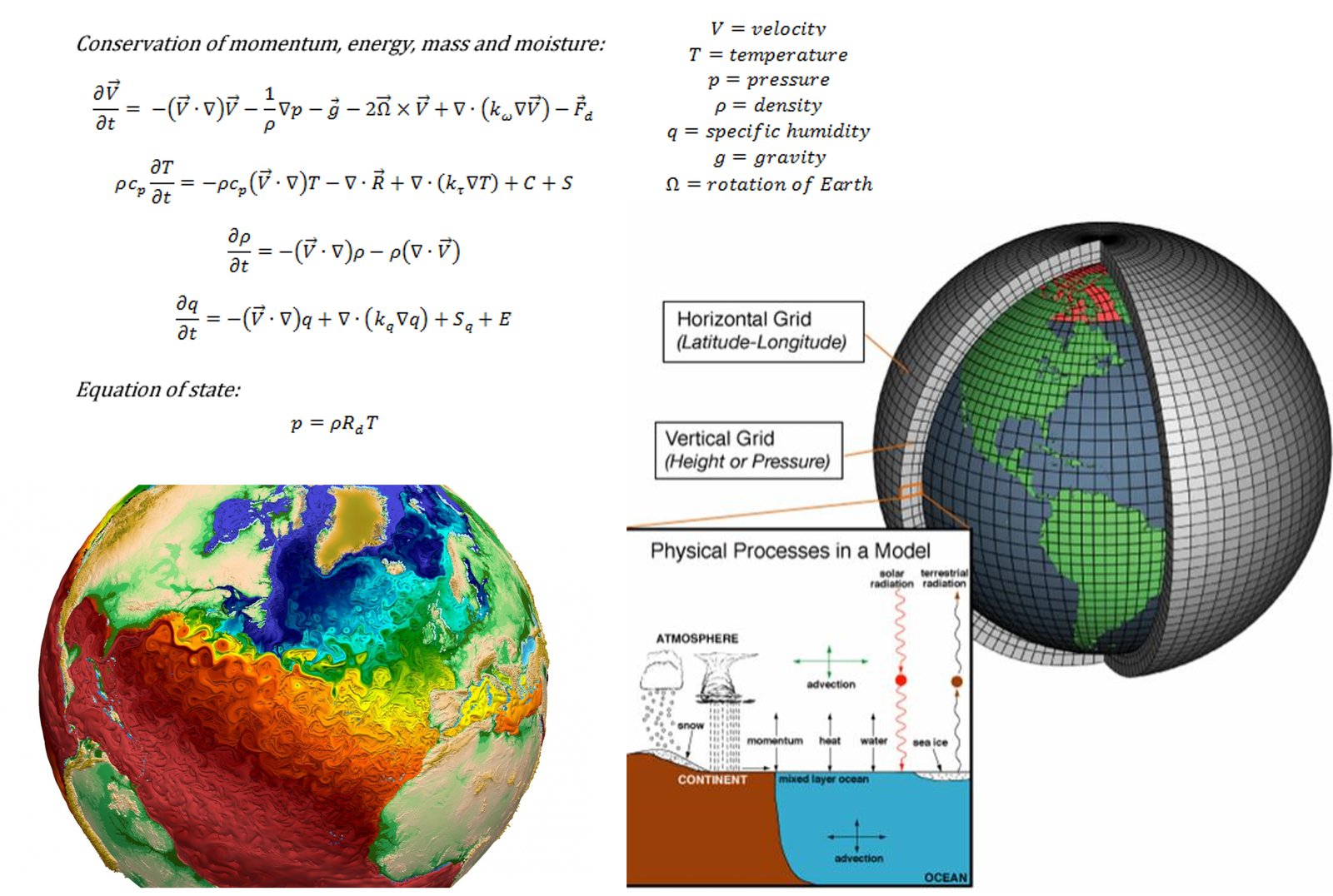
Feature 051 Key papers
Climate Modeling and Prediction
The climate model, which virtually simulates our climate system, is a useful tool to understand and predict climate phenomena and climate changes. A hypothesis from the data analysis can be proved and supported by climate modeling. Climate System Laboratory (CSL) conducts research for improving climate models to accurately represent climate phenomena and increase climate predictability. In addition, we are...
- Climate system modeling and physical Parameterizations
- Earth system model with bio-geochemical processes
- Seamless climate prediction system from intraseasonal to interdecadal
- Optimal perturbation and climate prediction
- Climate Predictability
- Model Output Statistics
Study regions Korean Peninsula · Eastern tropical Pacific
Read the feature